Pahari Painters
1770-1820
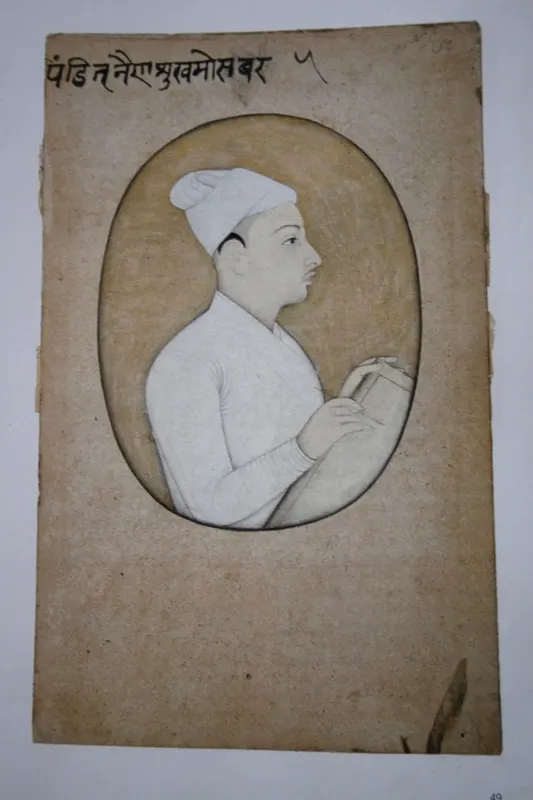
Pahari painting is a school of Indian miniature painting that flourished between the 17th and 19th centuries in the Himalayan foothill kingdoms of present day Himachal Pradesh, Jammu, and parts of Punjab and Uttarakhand. The name derives from pahar, meaning mountain.
The tradition developed across several sub schools, most notably Basohli and Kangra. Early Basohli work (late 17th century) is known for bold colour, intense emotion, and stylised faces. The later Kangra style (mid-18th century onward), associated with the patronage of Raja Sansar Chand, is celebrated for its lyrical delicacy, soft naturalism, and flowing lines.
Pahari painters drew heavily on devotional and literary themes, especially the life of Krishna, the Gita Govinda, Bhagavata Purana, Ramayana, and ragamala series depicting musical modes. Love, longing, and the divine play of Radha and Krishna are recurring subjects, often set against lush landscapes, monsoon skies, and hill architecture. The workshops were sustained by family lineages of artists, the most influential being that of Pandit Seu and his sons Manaku and Nainsukh, whose refined idiom shaped the direction of the entire school.